I was heading up to the Boundary Waters about a month ago, and I saw that the Tettegouche State Park‘s new Visitor’s Center was looking almost complete. Because I’m a big fan of the MN State Parks system, I decided to stop by and chat with Park Staff this past weekend, to see what they thought of their new building. They like it.
A few weeks ago, the Tettegouche State Park recently had the ‘soft opening’ of their new Visitor’s Center.
Their old Visitor’s Center was built in 1986, and was expected to serve about 28,000 people annually:
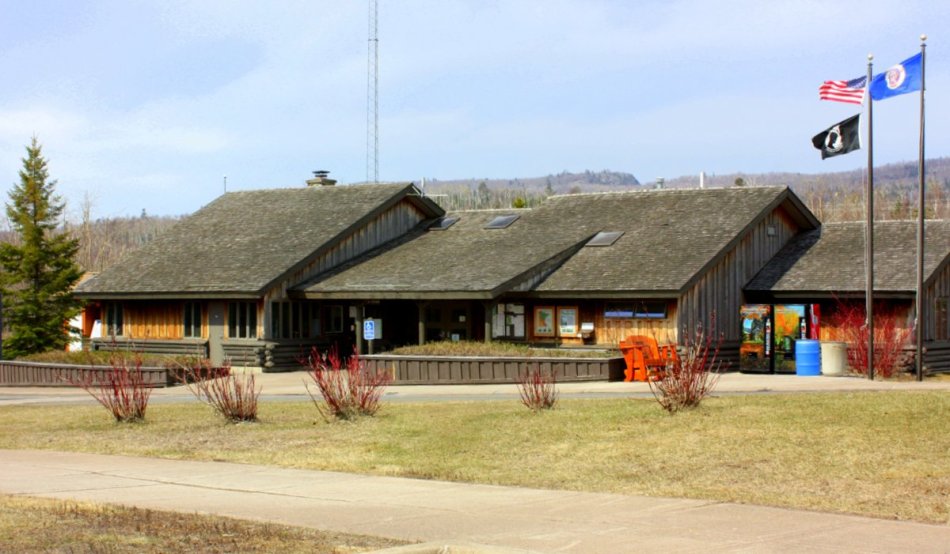
It wasn’t open for five years before Tettegouche staff were feeling pinched. In 2012, the Tettegouche Visitor’s Center was handling 332,000 people per year – about twelve times the number the building was designed to accommodate.
Tettegouche was established as a State Park in 1979. Compared to its more famous neighbor to the South, Gooseberry State Park, which was founded in 1934, Tettegouche is a relative newcomer. Despite Tettegouche having almost 10 times the acreage and significantly more access points, Gooseberry has been a jewel of a park for over 75 years.
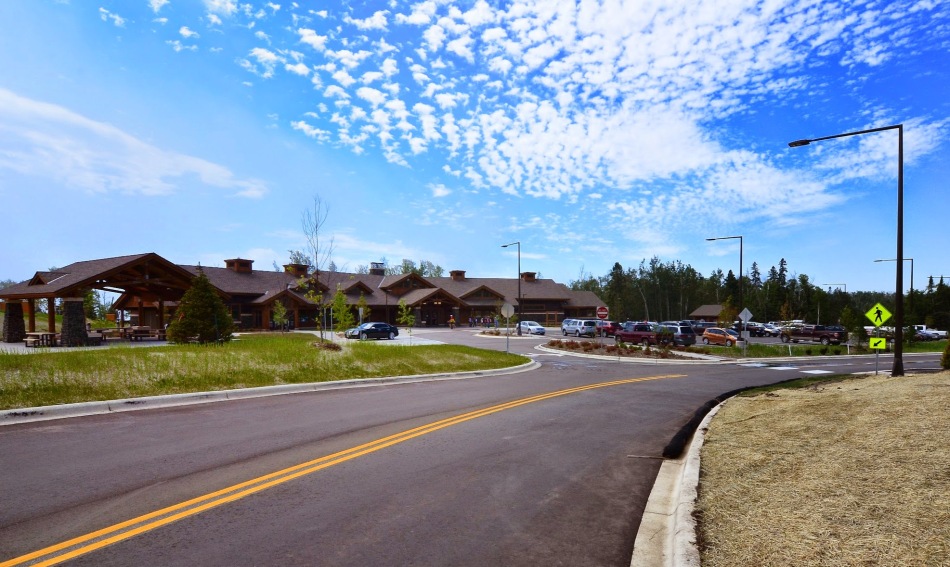
However, as I drove up on Sunday afternoon, the 50+ cars in the parking lot made it seem like Tettegouche’s time may be coming.
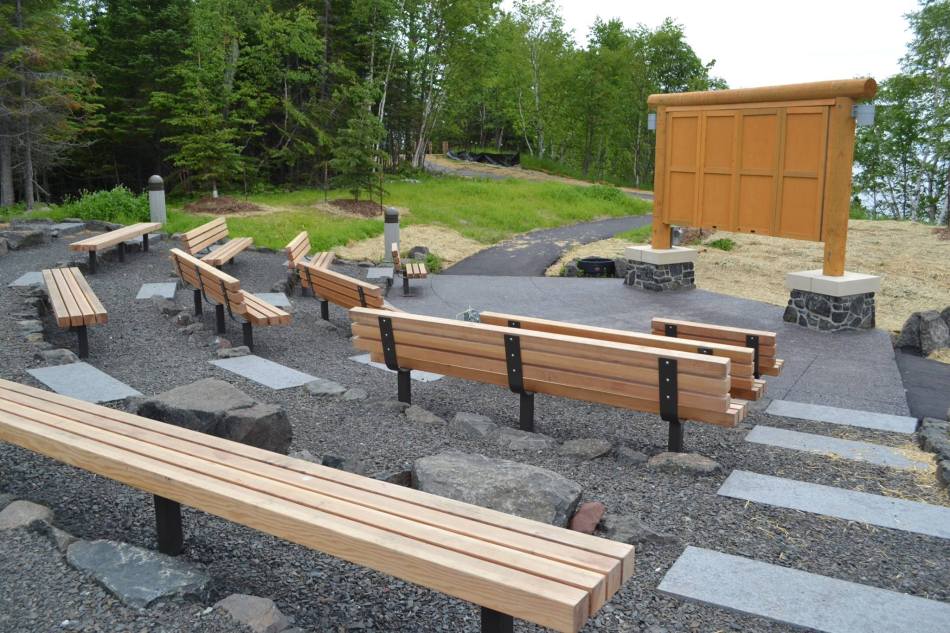
I took a walk around the back of the building and was impressed with the new amphitheater:
Also on the back of the building, they have a big open area with a fireplace that looks like a great gathering spot:
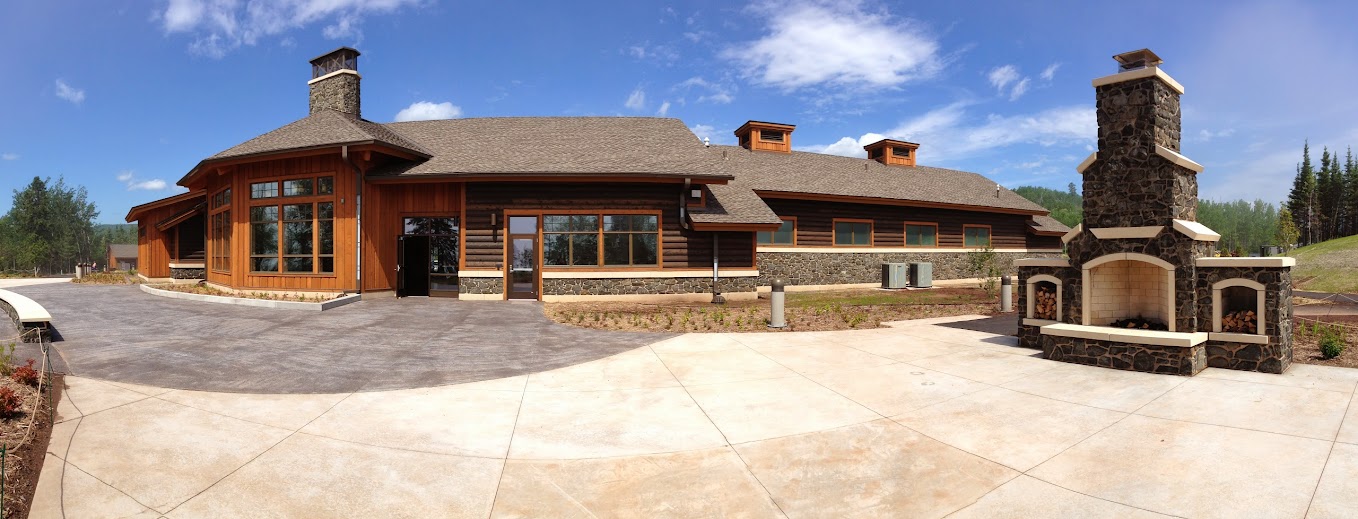
The architecture looks reminiscent of the David Salmela-designed Gooseberry Falls Visitor’s Center, which was apparently intentional, according to park staff.
One area where the Tettegouche Visitor’s Center far-exceeds the Gooseberry Visitor’s Center is in the attention to energy and sustainability. In the parking lot is a 24.3 kilowatt solar array:
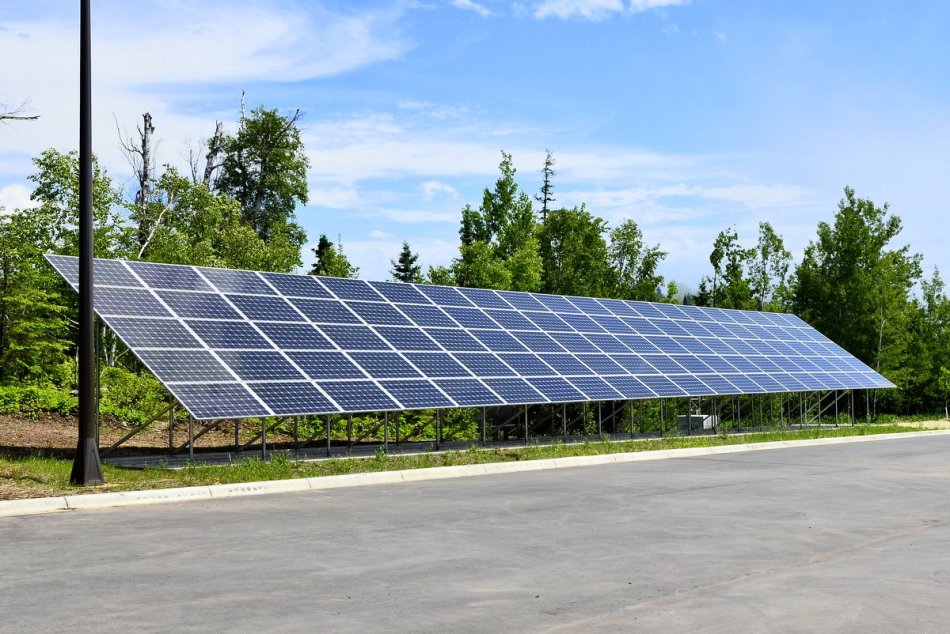
This array is expected to generate over a third of the visitor center’s energy needs. Additionally, the walls are 8″ thick structural insulated panels. The design also includes a significant upgrade to Tettegouche’s stormwater handling, with expanded rain gardens and water handling features.
Inside, most of the exhibit space is done (the line on the carpet in this photo indicates a still-being-delivered exhibit):
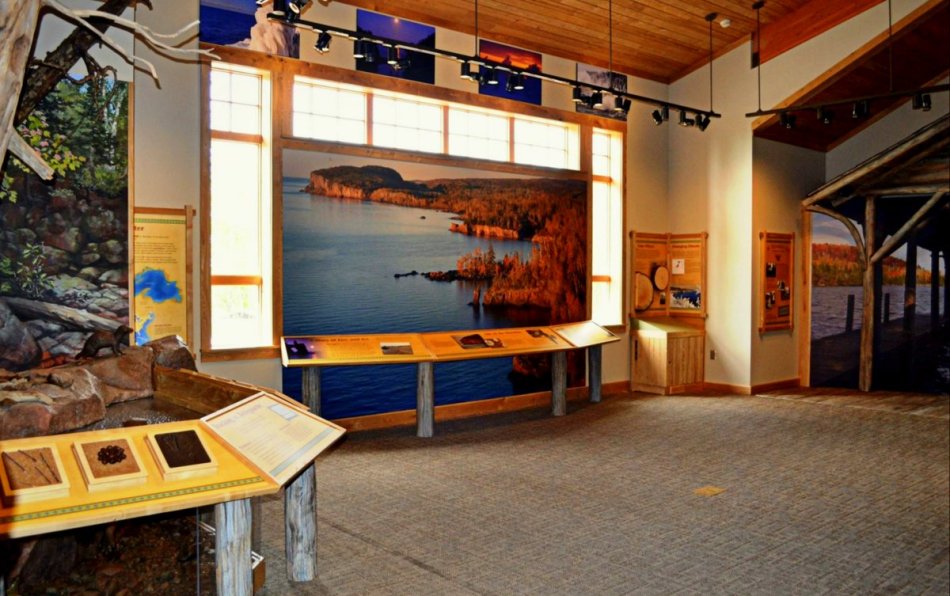
For the regular visitor, the interior is smaller than the Gooseberry visitor’s center. There is less exhibit space and a much smaller gift shop. However, the two buildings are almost the same size – in fact, according to park staff, Tettegouche’s visitor’s center is exactly one cubic foot smaller than the Gooseberry visitor’s center. Since Tettegouche services several State Parks, it houses the staff for those parks, whereas Gooseberry’s office space is just for Gooseberry.
The building isn’t an unalloyed success – it was originally budgeted at $4.2 million, with an expected completion in 2011. The current budget is $7 million, and although the visitor’s center is open, the official opening won’t be for another month or two.
When I visited, the visitor’s center was in heavy use. The Duluth-based musical group Four Mile Portage was on what they are calling their “North Shore Dance/Bike/Busk Tour,” playing gigs from Grand Marais to Duluth, as they rode from park-to-park on their tandem bicycle. They were set up in the amphitheater, picking banjo, playing fiddle and singing. The cash register at the gift shop was constantly ringing people up, for the ten minutes or so I was chatting with the park ranger. The license plates on the cars in the parking lot were from dozens of states. I think it’s safe to say that the Minnesota DNR has made a good choice.
Here’s a FACT SHEET about the new building.





 Outside Duluth